Tasting & Living #20 May 2012
A Brussels based foodie blog-magazine with an international and healthy appetite … tastingandliving@hotmail.com
You can scroll the shelf using ← and → keys
Donderdagochtend rond zes uur ‘s ochtends. De Brandweer van Lommel krijgt een dringende melding binnen: op de Dempseylaan in Hamont-Achel woedt een brand, meldt een voorbijganger. Zowel het Lommelse korps als de voorpost van Neerpelt wordt opgetrommeld en rukt uit.
Wanneer de brandweermannen aankomen, schrikt de plaatselijke slager op. De man is druk bezig zijn hespen te roken. Al jaren rookt de slager zijn hespen op die manier, maar een vroege voorbijganger meende toch dat er meer aan de hand was in de achterbouw van de slagerij.
De spuitgasten kunnen dus niet anders dan onverrichterzake terug te keren naar hun kazerne. (AN)

Na De Hop Dog, is het deze zomer de beurt aan Hop Ice cream, het nieuwe idee van de creatieve mensen achter Hopdog. http://www.hopdog.be/nl/
We kijken er al naar uit en houden jullie op de hoogte waar deze ‘kreem kar’ zal staan!


If you feel somebody is eating your favourite ice cream all the time, well Ben & Jerry now have the solution: a euphori-lock! It fits round the lid of the tub of your favourite ice cream and you need a code to get it open. What an idea!

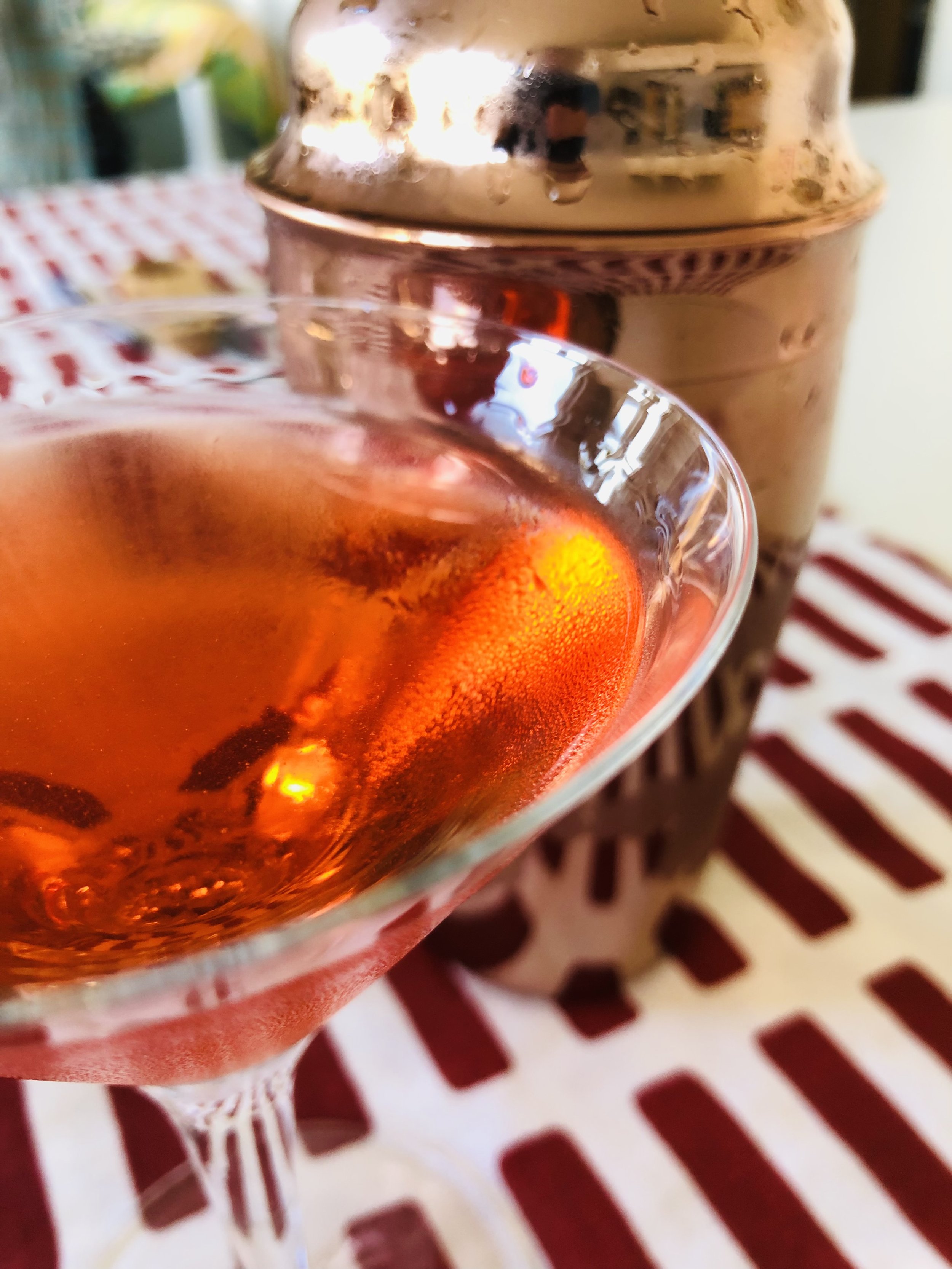
It’s spring and quite warm here in Brussels, so it’s the time to pretend it’s summer! So get those cocktail shakers out and a good bottle of gin. Our favourite is of course Hendricks, so here’s an ‘unusual’ G&T for you. ENJOY (But with moderation)
The classic gin and tonic cocktail was introduced to the world in the 18th century by the army of the British East India Company in India, almost by accident, as they added gin to their daily intake of quinine-based tonic water to make the elixir more palatable. Tonic water was taken at this time as preventative for the dreaded malaria. And so, the humble gin and tonic was created, and to celebrate the beginnings of the most quintessentially British cocktail, Hendrick’s Gin has created a gin and tonic with an unusual twist, which pays homage to its modest beginnings!
Inspired by a “lassi,” a traditional yoghurt-based drink of the Indian subcontinent, the use of sweet Falernum liqueur and coconut water in this cocktail highlights one of the eleven botanicals found in Hendrick’s Gin -– the zesty fresh taste of lemon peel. The sweetness of these two ingredients act as a contrast to the sharpness of the lemon, bringing its flavour to the fore.
A Most Unusual Gin and Tonic
Ingredients:
50ml Hendrick’s Gin
12.5ml freshly squeezed lime juice
12.5ml freshly squeezed lemon
50ml coconut water
15ml Falernum liqueur
Tonic water to taste (up to 30ml)
Preparation:
Build all ingredients in a highball glass over cracked ice. Stir to chill and mix the tipple. Garnish with both a cucumber and lemon wheel and a sprig of fresh mint.
Bakkerij Goossens is ontegensprekelijk de meest authentieke bakkerij in de Sinjorenstad. In een klein pand gelegen in de Korte Gasthuisstraat, is het reeds de vierde generatie van de familie Goossens die elke dag opnieuw naar oude traditie brood en patisserie bereidt.
Roggeverdoemmekes, échte boterkoeken en de grote speculoosharten rond 6 december zijn de specialiteiten van het huis. De langer rijen – zowel bij regen als zonneschijn – zijn een typisch fenomeen en zijn het meest overtuigende uithangbord van de unieke kwaliteit.
Al bij het aanschuiven in de rij, wordt je geprikkeld door het Parisienne karakter van de etalage. Ook het interieur met vele gouden en marmeren elementen doet je even wegdromen naar vervlogen tijden.
Bij een bezoek aan Antwerpen is het zeker de moeite om even binnen te springen!

Bakkerij Goossens
Korte Gasthuisstraat 31
2000 Antwerpen
T +32 3 226 07 91
Open: dinsdag tot zaterdag van 7 tot 19u.
Pieter
Van 25 mei tot 10 juni 2012 vindt het Canadese kreeftenfestival plaats in gans België
39 Belgische restaurants laten u de smaak van de Canadese kreeft ontdekken

De Canadese Ambassade kondigde vandaag aan dat het Canadese kreeftenfestival dit jaar doorgaat van 25 mei tot 10 juni. Zoals de voorbije jaren vindt het festival plaats in samenwerking met het Canadese Landbouwministerie en invoerder LobsterFish.
In totaal 39 restaurants, verdeeld over gans België – waarvan 8 in het Brusselse gewest, 16 in Vlaanderen en 15 in Wallonië – geven de Canadese kreeft een ereplaats op hun menukaart. De deelnemers, met onder andere verschillende Meesterkoks van België, “Maîtres Rôtisseurs de Belgique” en “Jeunes Restaurateurs d’Europe”, vormen een mooi gespreide waaier zodat eenieder de kans krijgt om de lekkere schaaldieren in zijn omgeving te ontdekken.
Voor het 17de opeenvolgende jaar…
Hoewel kreeft een traditioneel gerecht is voor de eindejaarsfeesten, is de Canadese Atlantische kreeft op zijn best tussen mei en juni, vlak voor de verschaling, als de schaal het hardst is en als het dier het meest vlezig is. Op dat moment is de smaak ervan ook op zijn best.
In 1996 startte mevrouw Anne-Marie Veulemans van restaurant François met het eerste Kreeftenfestival. De beste Brusselse visrestaurants van de Vismet volgden meteen en samen lanceerden zij de om de aankomst van de “nieuwe” Canadese kreeft te vieren met een gastronomisch festival. Zij boden de culinaire lekkernij aan in subtiele bereidingen, met evenveel variaties als er deelnemende restaurants waren.
Sinds drie jaar, en onder impuls van invoerder LobsterFish en de Canadese Ambassade in België, zijn de restaurants die deelnemen aan het ‘Festival van de Canadese Kreeft’ nu verspreid over heel België. Ze stellen allemaal een menu voor waarin kreeft de hoofdrol speelt. Elk restaurant maakt de schaaldieren klaar op zijn eigen manier, volgens de inspiratie en creativiteit van de chef, nu eens als voorgerecht, dan weer als hoofdgerecht.
Deelnemende restaurants
Brussels gewest:
Belga Queen
Bij den Boer
François
La Belle Maraîchère(MK)
L’Herbe Rouge
Rugbyman I
Rugbyman II
Cambrils
An italian island close to Africa?
Couscous as part of the staple diet, rather than pasta?
Does that exist? Yes, it does actually exist.

Here are some fast facts: it’s located about 80 km from the Tunisian coast and on clear days you can see Capo Mustafà and even Capo Bon on the Kelibia penisula of Tunisia, it’s about 85 sq. km big , 836 m high, mostly green, rocky bays, very little beaches, lots of wind, rather dry and hot in summer, regular power black outs, expensive car hire, hardly any good hotels … so what’s the attraction here?
Well lots really.
You reach the island after a 45 minute plane trip from Palermo with a rather basic propeller plane and about 20 other passengers. And flying over nothing else but water, you then realise that Pantelleria is actually rather isolated. It’s literally in the middle of the Sicilian strait that forces deep currents between the south of Sicily and the Tunisian coast.
Buffeted by winds, even in August, the island is characterised by jagged lava stone, low-slung caper bushes, dwarf vines, steaming fumaroles and the famous azure blue lake with ‘therapeutic’ mud for a good body scrub.
The exotic and remote atmosphere of Pantelleria has long made it a favourite with celebrities, Giorgio Armani owns a large and fabulous dammuso on the eastern part of the island.

The thing to do here is to rent a dammuso. It’s a construction with big blocks of black lava stone with a smooth and sparkling white clay domed roof. Very arabian and obviously one of the remnants of previous invaders.
So food-wise there’s everything you could want.
Firstly the arid but fertile black volcanic soil produces sun drenched vegetables and fruit, with a pure and intense taste. Try and find the local small stalls that are dotted all over the island.
Secondly the island produces one of the finest desert wines on the planet: Passito.
It’s an outstanding wine without the over-sweetness of syropy consistency of other desert wines. It has a exotically fruity, sometimes spicy tone and is refreshing as an aperitif or after dinner drink.
Passito is made from the Zibibbo grape, a variety of the ancient muscat grape. The first description of the production of a passito wine comes from Columella in the first century AD, writing about the Passum wine made in ancient Carthage. The modern Italian name for these wines, passito, echoes this ancient word. Perhaps the closest thing to passum is the Passito di Pantelleria.

The ripe bunches of grapes are hand-picked and placed on a ‘cannizza’ and exposed to the sun, covering them at night from the dew. Once the bunches become dry, the grapes are placed in jars and covered in must. After six days they are pressed, and the liquid is gathered. After this, the pressed liquid is mixed with some juice which had been kept in the sun for 3 days. All this is placed in clay containers, closed tightly and opened after 20 or 30 days of fermentation. Because of this very labour intensive cultivation, Passito wines to be rather expensive.
We tasted about 7 – 8 different ones and they varied in price from 12 euro to 45 euro.
We also visited the Cantina Valenza in Monastero after a rather wild and dusty 25 minutes drive with our rusty Fiat Panda. It has (but doesn’t always sell) the infamous Gerard Depardieu Passito wine which is produced on vineyards just adjacent to theirs. The price of the bottle was rumored to be around 10 euro per centiliter! So we didn’t indulge. However their own production ranks amongst the best at a fraction of the price.
We did manage to get our hands on a bottle of Carole Bouquet’s (his ex-wife) ‘Sangue d’Oro’. Who also took up the hobby at some point in her life. The bottle remains unopened until present, however as soon as we have tasted it, it will be reported back on this blog of course.
The Donnafugata Passito; Ben Rye is probably the top ranking Passito in international wine tasting competitions and at around 40 euro, a must buy for those who want to try a top Passito.

Anyway, the third food ingredient which is grown on the pantellerian soil is capers. The plant grows all over the island, wild as much as in ‘cultivated’ patches. again manual picking is necessary here so the small morsels go for high prices. Especially the smaller one are most expensive and highly sought after. A D.O.C. for the capers has been put in place because of the essential link between the island and the caper.
So if you mix the wine, the capers and the fabulous vegetables, you get a very interesting Italian-Moorish combination of flavours in local dishes. Pasta is obviously present, however the couscous with roasted fish and powerful fish stock is the top dish on the menu all over the island. Our favourite restaurant is La Vela, just a couple of meters from the water in the tiny harbour of Scauri. It’s all open air and no frills, just the ingredients that do the talking. Make sure you call ahead to book a table because it’s not prepared every day.
So if you mix the wine, the capers and the fabulous produce from Pantellaria, you get a very interesting Italian-Moorish combination of flavours in local dishes.
Of course apart from this, you also have the sicilian pastries; cassata siciliana (the cake not the ice cream), or the almond based biscuits that are omnipresent in the bakeries in the port town of Pantelleria. We recommend ‘Katia’ for its outstanding cakes and ice creams. You can also get freshly made pastas here and we especially liked the ravioli filled with ricotta and sage. Irresistable with just some melted butter on top!

So all in all Pantelleria is not a bad place to be, at all.
It is far away from anything, difficult to reach and actually, that’s the beauty of it. So make sure you don’t go during august, when half of northern italy has emigrated to either Sardinia, Panarea or Pantelleria for their holidays, but try to go end of June when the rental prices are still sometimes 50% lower than after 15th of July, or even in September.
Before you leave, we recommend that you read ‘Il Libro dell’Isola di Pantelleria’ by Angelo D’Aietti, Editore Il Pettirosso. It’s the one and only reference book for Pantelleria lovers (albeit in Italian).
So please don’t go and leave it all to ourselves!
If you DO decide to go, contact the great team of Il Dammuso. http://www.ildammuso.com/
They have the best portfolio of houses available on the island, prices range from 300€ a week (depending on the season).
And if you feel like spending just a little bit more, then they also have an exclusive list of dammusos: http://www.pantelleriacollection.com/it/home/
They will also organise the car rental for you and recommend the best foodie addresses on the island.
Contact Giovanni on info@ildammuso.com or via their website.
Amaai we worden hier wel verwend met de high society chocolade van Patrick Roger!

As the latest trend in haute cuisine, edible flowers have brought new botanical species to our plates. But if this is a recent discovery for foodies, the world’s great chefs have been using flowers as ingredients for more than a decade now: from rose petals to lavender, to more reassuring flowers like those of thyme, dill, coriander, chives or violets.

In the kitchen, flowers get used in the preparation of salads, gelatins, soups, flans, desserts and ice creams, and their use is not solely decorative: each one adds a unique, precise flavour to a dish. Calendula, for example, is slightly spicy; violet adds scent to everything; begonia has a citrus flavour and some spices like cloves can be immersed in wine, caramelized or used as decoration for cakes. And chrysanthemum flowers will add a pleasant bitter bite to your delicacies.
Anyone who’s ever had the good fortune to try a dish called Water Lilies from Ferran Adrià of elBulli, will probably never forget the experience, or walk through a garden in the same way: cashews are served over a soup of tea, geranium leaves and begonia flowers. When it comes to botanical cuisine, Spain’s chefs have been leading the way. “If I want rosemary I can use its flowers, which have a fabulous aroma, rather than rosemary as such. Another thing we like about them is their texture,” the Catalan chef Andoni Luis Aduriz, who’s been using edible flowers for years, has said. And its phrase that perfectly sums up the philosophy of those who go grocery shopping in the garden. This kind of approach is why flowers are so perfectly suited to the new kind of avant-garde cooking that seeks to satisfy all senses, not just our sense of taste.
Much more than just a “touch of colour” or a passing fad, starred chefs also use edible flowers as a tool for communication. In 1990, two French chefs, each with three Michelin stars, Michel Bras and Marc Veyrat began experimenting with flowers in order to safeguard a philosophy of cuisine that emphasizes the environment and sustainability. Themes that we all know well now, but that seemed almost radical twenty years ago.
Although really, nothing comes from nowhere: if we think of our grandparents or great-grandparents, it’s not hard to imagine them gathering nature’s bounty and bringing it to the table. And besides, botanically, vegetables like broccoli, cauliflower and even artichokes are all actually flowers. The precious spice, saffron, is comes from the stamen of the crocus, and capers come from the flowers of this Mediterranean bush. Before trying your hand at experimentation, however, remember to wash flowers carefully before eating, don’t use anything bought at a florist’s, and don’t gather from the sidewalks. Use only the petals, and throw away the green parts. The darker ones are usually organic and are easily ordered online.
But how should you use them if you’re not necessarily a great chef? The easiest way is to mix them into a salad and dress to your liking. Just one last tip: the best moment to pick them is in the early morning, when the dew has just formed on the petals. Place them gently in a basket as if they were made of crystal. It will do you good both for your spirit as your mind.
Roberta Schira
Wij kijken vooral uit naar de garnalenboot en de grijze garnaaltjes natuurlijk!
Bianca Debaets heeft ons opmerkzaam gemaakt op een plaats waar het heerlijk vertoeven is vlak naast het water, met een nautisch thema: de Royal Brussels Yacht Club, één van die te weinig bekende parels in onze stad. Net naast de Van Praet brug.
Allen daarheen deze zondag! Blijkbaar gaan ze ook een roeiwedstrijd organiseren, een beetje zoals die bekende engelse Cambridge-Oxford reeks.